
Articles
Early Childhood Classroom Management Strategies to Calm the Chaos

A child refusing to leave the dining area. Another bursting into tears when it’s time to pack up. While coaxing the upset children, another snatches a toy from their classmate and the centre quickly erupts into chaos.
Scenarios like these are probably all too familiar to early childhood educators, who find themselves split between multiple conflicts from children who have yet to develop the ability to navigate difficult situations.
At its core, early childhood classroom management is about giving children recognisable cues so that they know what to expect and who they can turn to whenever tough choices have to be made. When executed well, these routines build the very cognitive, motor, and social skills required for behavioural regulation.
So instead of asking “How do we stop this behaviour?”, effective educators first seek to understand what a child is trying to communicate. Drawing on insights from NIEC (NP) Campus Lecturer and Early Intervention Specialist, Ms Ng Hui Wen, this article explores practical classroom management strategies that help prevent behavioural difficulties before they escalate and create calmer, more positive learning environments for children.
3 essential classroom management skills
Establishing routines and boundaries can go a long way in reducing anxiety among children who are still developing self-regulation and impulse control.
Proactive classroom design and planning
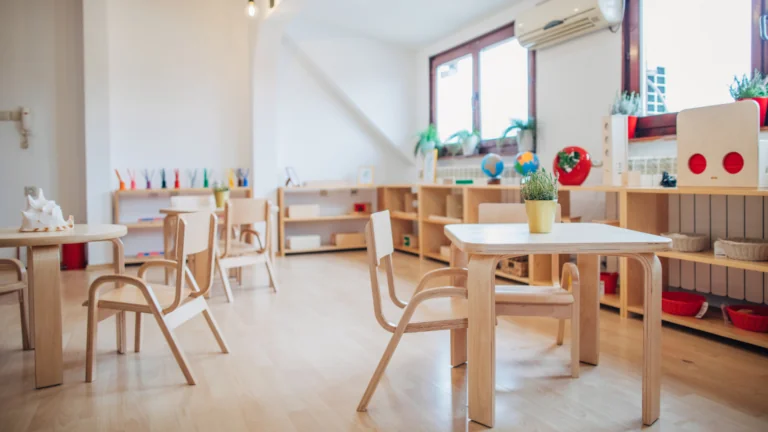
Classroom layouts with corners dedicated to specific activities at specific times can greatly reduce the need for adult intervention. Visual cues such as labels and pictures or even playing a consistent sound to signal the end of a session can also establish predictable structure that reduces instances of bargaining for extensions.
Calm and consistent responses
Children often mirror the energy of adults around them, which is why it is important for educators to remain calm during tense situations. In practice, this means lowering one’s voice and reinforcing boundaries whenever a rule is broken, such as saying “You look frustrated because your friend has the truck. But we don’t grab, let’s find another one.” Repeating sequences consistently and implementing guidelines for all teachers and assistants to use the same short phrases to set expectations can help children predict how adults will react. Over time, this encourages them to resolve conflicts on their own.
Positive reinforcement
The reverse side of boundary establishment is positive reinforcement, when educators want to encourage rather than eliminate behaviours. Instead of simply saying “Good job,” whenever positive behaviour is observed educators can provide specific feedback such as “I noticed you helped your friend put away the blocks. That was very thoughtful.” to reward specific behaviours and increase the likelihood of repeating it. This acts as a good counterbalance to negative reinforcements such as “No” or “You can’t do that” by helping children develop reasoning and social perspective.
5 steps to de-escalating dysregulated behaviour
Moments of dysregulation are still bound to happen even in the most well-designed classrooms. During those heightened situations, the educator’s role is less about correction and more about co-regulation. That is, providing structure that the child’s nervous system can borrow until they find their footing again.
- Get to their level – Kneel, stay close, and stay calm. Dropping to a child’s eye level removes the towering, top-down posture that can feel intimidating in an already tense situation, and signals through body language that you’re there to help rather than to punish.
- Name and acknowledge the feeling – “You look sad because you had to wait a long time.” Naming the feeling makes a child feel seen and removes the need to escalate just to be heard.
- State the boundary clearly – “We do not grab. Grabbing is painful.” Short, unambiguous sentences are far easier for children to process than long explanations. It also gives a child less room to negotiate or test by drawing sharp boundary lines.
- Offer two acceptable choices – “Do you want to set the timer for a turn, or find another toy?” Rather than stating a command that the child must obey, offering choice restores a small sense of control while still keeping boundaries intact.
- Follow through calmly – If a child’s behaviour persists, remove the item of conflict or the child from the situation calmly and gently. Flat, predictable consequences remove the incentive to escalate while also enforcing lines that cannot be crossed.
3 parent-friendly ideas
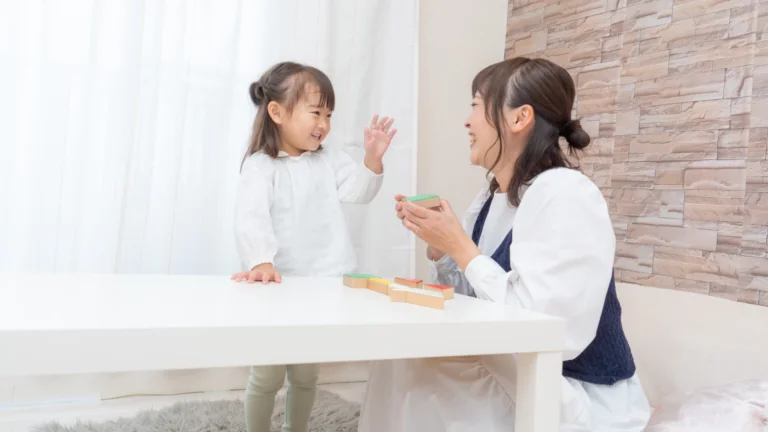
Keeping rules consistent between home and school environments can be tricky, but it is often the very thing that children need to feel secure. By sharing small, proven techniques in the classroom, educators can support parents without overstepping boundaries.
- The five-minute transition warning – Encourage parents to give simple, consistent time cues such as “In five minutes, we’re going to stop and get ready for dinner,” supported by a visual timer on a phone if helpful. These gentle, repeated signals act like mental handrails, giving children time to shift out of deep play before the expectation changes.
- First/then language – Rather than repeated reminders or negotiation, parents can use clear, motivating structure: “First teeth brushing, then story time.” This works because it removes ambiguity and reduces emotional back-and-forth. Over time, the sequence itself becomes the cue, and routines start to run with far less verbal prompting.
- Share your visuals – Simple visual schedules at home, such as printed photos or drawings placed at eye level, help children “see” what’s coming next instead of relying on repeated verbal instructions. Pairing these with consistent auditory cues like chimes or short alarms can further strengthen predictability, much like transition songs in the classroom that signal movement without escalation.
Note: Never imply that parents are raising their children ‘the wrong way’. Instead, provide observations and suggestions such as “We’ve noticed that your child responds well to visual cues, would you like a digital copy of the visuals to print at home?” Framing feedback in the form of offering support and resources can help maintain positive relationships that aid a child’s development as parents and teachers work as a team.
Set clear classroom expectations for a conducive learning environment
Clarity is kindness, especially in early childhood environments. By building a safe, predictable environment that still allows curiosity to stretch its legs, children can not only learn appropriate classroom behaviour but also understand the reasons behind why certain behaviour is allowed. Level up your classroom management game with related CPD courses at NIEC.
INTRODUCING OUR FACULTY
 With close to 12 years of experience in early intervention, Ms Ng Hui Wen focuses on practical, relationship-centred strategies that support children through naturalistic learning moments. She holds a Masters Degree in Professional Education (Training & Development from the National Institute of Education, Nanyang Technological University, and a Bachelor’s degree in Special Education from Flinders University.